

Read the following texts carefully before answering the questions below / Lee los siguientes textos atentamente antes de responder las preguntas de abajo:
The Industrial Revolution began in the United Kingdom during the mid-18th century. Fueled by abundant local resources like coal and iron, alongside immense colonial wealth, Britain rapidly transformed into “the workshop of the world.” This dramatic shift saw the nation move away from traditional agricultural life toward a dynamic, urbanized society centered around factory production.
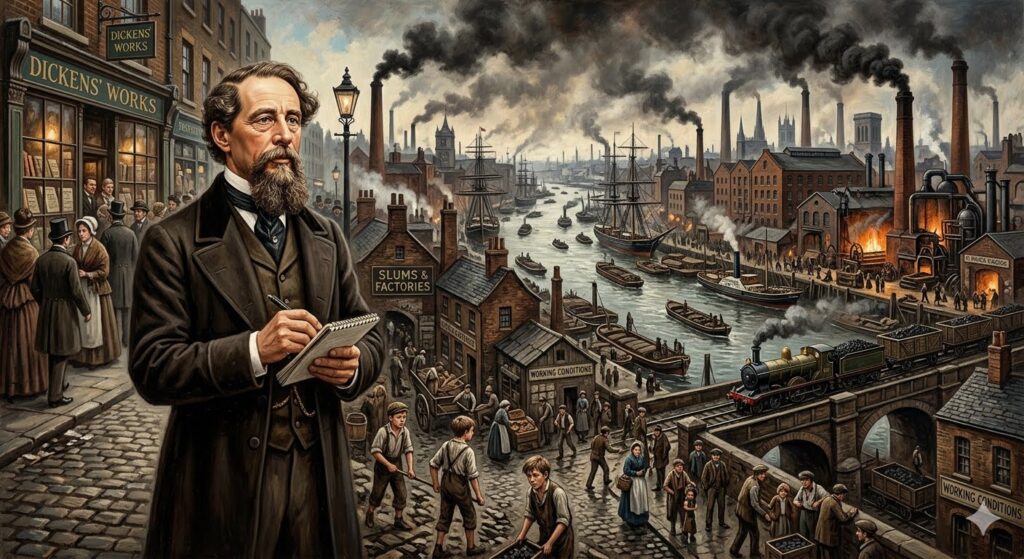
Inventions like the spinning jenny and James Watt’s steam engine revolutionized manufacturing. The British landscape changed drastically as green fields gave way to smoky factory skylines. Cities like Manchester and Birmingham grew at an unprecedented speed as thousands of families flocked from rural areas looking for factory jobs.
Inside these new factories, systems like the assembly line were introduced to increase efficiency and make mass production possible for the first time. However, this progress came with a massive human cost. Working conditions were notoriously harsh, featuring long hours, dangerous machinery, and the widespread use of child labor. These grim realities eventually sparked severe unrest, leading to the rise of trade unions and the first legal labor reforms designed to protect workers.
Despite the suffering of the working class, the era also saw the emergence of a powerful new middle class composed of wealthy factory owners and businessmen. The industrial powerhouse created during this period left an enduring legacy visible today in the nation’s infrastructure, legal systems, and modern capitalist economy.
Born in Portsmouth in 1812, Charles Dickens became the most celebrated British writer of the Victorian era. His early childhood was marked by sudden poverty when his father was sent to a debtors’ prison. At just twelve years old, young Charles was forced to work long hours in a grim blacking factory, pasting labels onto bottles. This traumatic experience deeply defined his worldview and fueled his lifelong passion for social justice.
Dickens channeled these difficult early life experiences directly into journalism and fiction writing. Through masterpiece novels like Oliver Twist and David Copperfield, he exposed the stark duality of London’s industrialized society. He used humor, satire, and unforgettable characters to criticize the cruelty of workhouses, the neglect of poor children, and the greed of the wealthy elite.
Beyond his literary success, Dickens was a tireless activist. He delivered public lectures across the country, constantly promoting education and health reforms for the less fortunate. His widely read stories, including the classic A Christmas Carol, touched the hearts of millions and successfully forced the public to confront the severe social inequalities of the time.
When Charles Dickens passed away in 1870, he left behind a monumental legacy that permanently altered how society viewed poverty. To honor his incredible contributions to literature and human rights, he was buried in Poet’s Corner at Westminster Abbey, remaining a powerful symbol of social conscience to this day.