

E-mails Exercises
1

2
ACTIVITY DEALING WITH E-MAILS
MULTIPLE CHOICE
| 1. What is the purpose of a subject line in an email? A) To introduce yourself B) To state the main topic C) To include your signature D) To add attachments 2. How should you address the recipient in a formal email? A) By their first name B) By their nickname C) By their title and last name D) By their email address 3. What should you include in the body of a clear and concise email? A) Unnecessary details B) Jokes and humor C) Only the main points D) Your life story 4. Why is proper grammar and spelling important in an email? A) To show off your skills B) To confuse the recipient C) To ensure clarity and professionalism D) To save time 5. What should you include at the end of a formal email? A) A joke B) A signature with your name and contact information C) A photo D) A video 6. What is the purpose of a CC (carbon copy) in an email? A) To send the email to multiple recipients B) To send a copy of the email to someone else C) To attach a file to the email D) To delete the email 7. How often should you check for grammar and spelling errors in an email? A) Only once B) Twice C) Multiple times D) Never 8. What should you do before sending an email? A) Take a break B) Read it aloud C) Proofread it for errors D) Delete it 9. Why is it important to use a clear and concise subject line? A) So the recipient knows who sent the email B) So the recipient knows what the email is about C) So the recipient can delete the email D) So the recipient can forward the email 10. What should you include in the body of an email when requesting information? A) Unnecessary details B) Only the main question C) Your life story D) A joke |
TRUE OR FALSE
- _____ You should use slang and abbreviations in formal emails.
- _____ The subject line should be long and descriptive.
- _____ You should proofread your email for grammar and spelling errors.
- _____ Using all capital letters is an effective way to emphasize points.
- _____ You should include your email address in the body of the email.
- _____ You should use emojis in formal emails.
- _____ The tone of an email should always be formal.
- _____ You should include your phone number in the body of an email.
- _____ Using “Reply All” is always the best option.
- _____ You should wait a day before sending an email to ensure you’re calm.
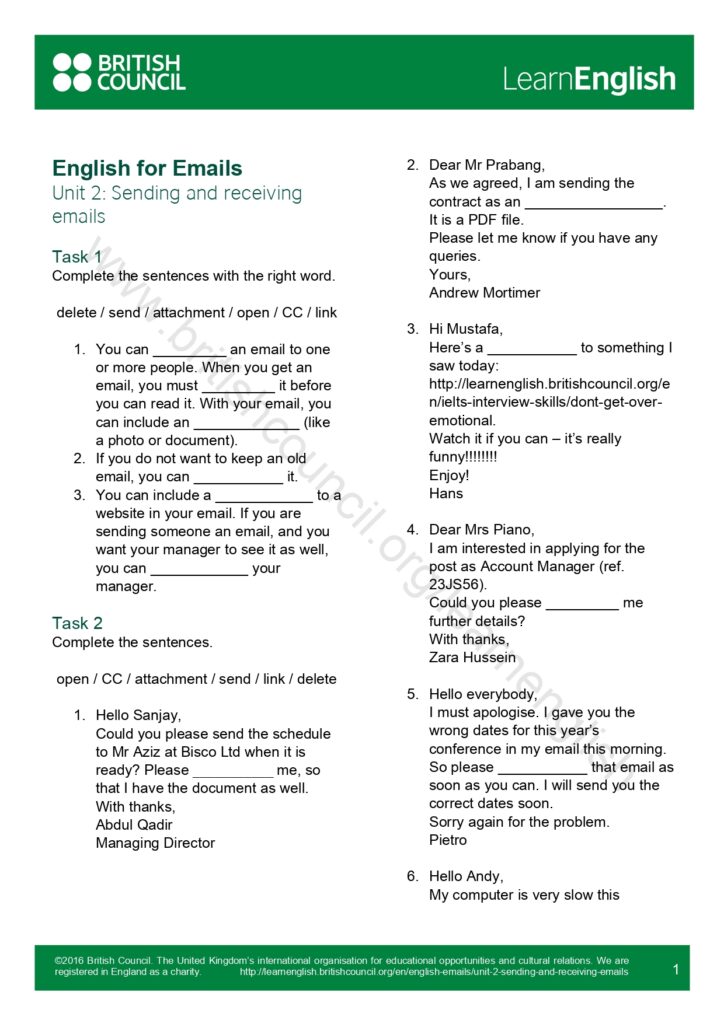
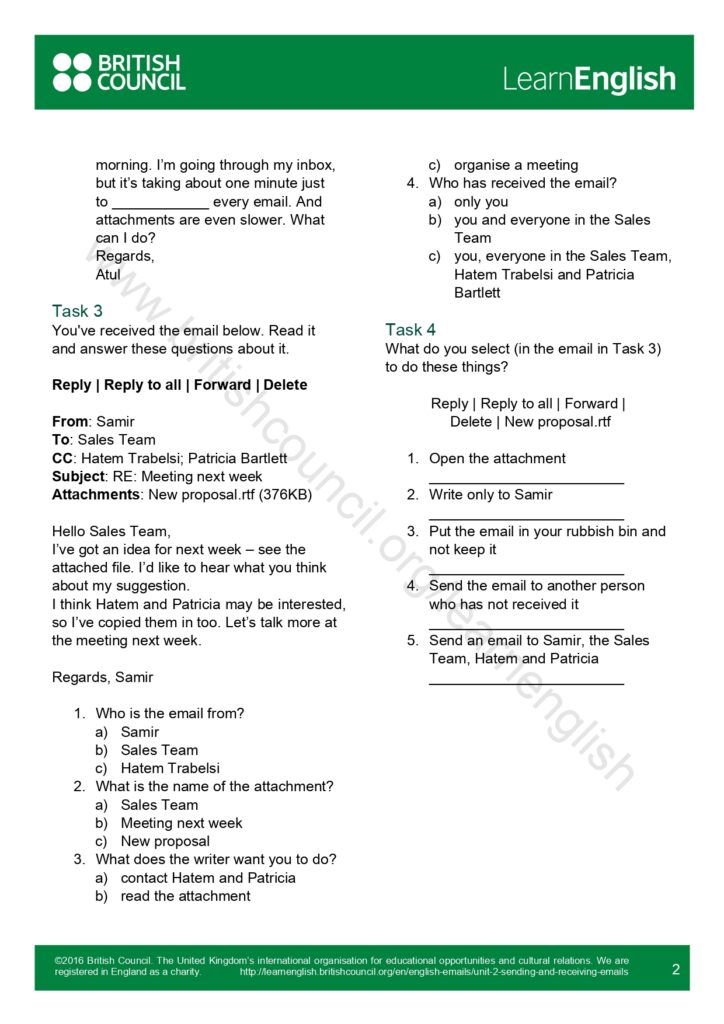
SELECT THE CORRECT WORD FROM THE LIST TO COMPLETE THE SENTENCES
| A: standard B: formal C: greeting D: contact E: clear F: review G: subject H: proofread I: attach J: title |
| 1.- The first line of an email should be a formal _________ to the recipient. 2.- The _________ line should clearly state the purpose of the email. 3.- In a formal email, you should use a _________ font, such as Arial or Times New Roman. 4.- When writing to someone you don’t know, use their _________ and last name. 5.- The body of the email should be _________ and to the point. 6.- You should _________ your email for grammar and spelling errors before sending. 7.- Use a _________ closing, such as “Sincerely” or “Best regards”. 8.- Include your _________ information, such as your name and email address, in the signature. 9.- If you’re attaching a file, make sure to _________ it to the email. 10.- Before sending, _________ the email to ensure it’s well-written and effective. |
MATCH THE COLUMNS
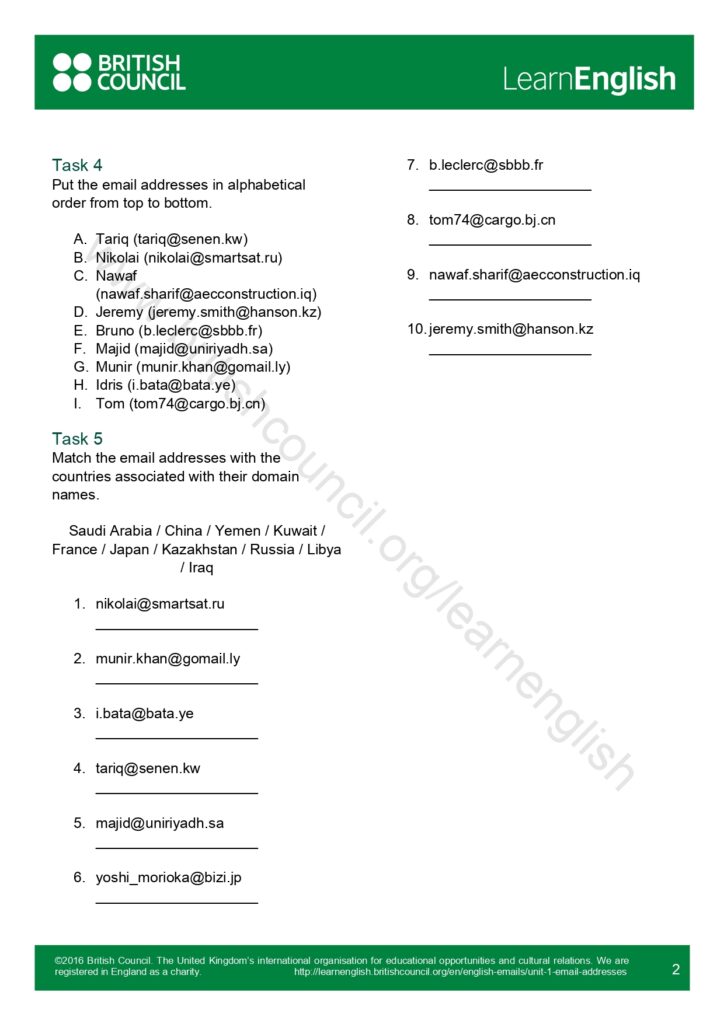
1. Subject Line
2. Greeting
3. Body
4. Closing
5. Signature
6. Attachment
7. CC
8. BCC
9. Salutation
10. Postscript
_____ A. A brief message sent to multiple recipients
_____ B. The main content of the email
_____ C. A copy of the email sent to someone else
_____ D. A way to attach a file to the email
_____ E. A formal ending to the email
_____ F. The recipient’s name and title
_____ G. A brief summary of the email’s purpose
_____ H. Additional information added after the signature
_____ I. The sender’s name and contact information
_____ J. A secret copy of the email sent to someone else