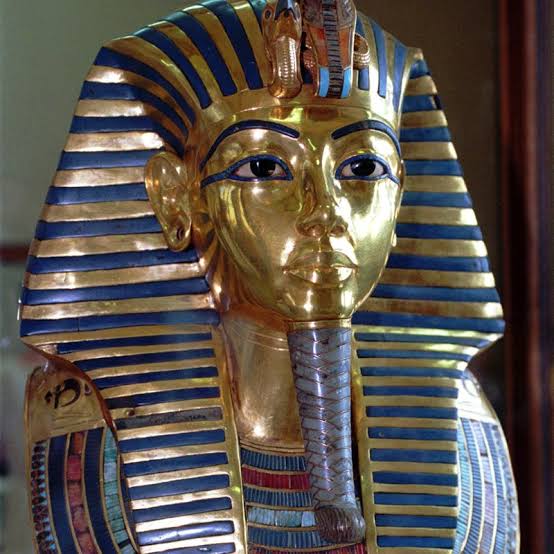
👑 Tutankhamun: The Boy Pharaoh
Level: Segundo Ciclo Medio (EPJA) • 3rd & 4th Year
Topic: The life, reign, and discovery of Ancient Egypt’s most famous pharaoh
Questions: 15 multiple-choice • Passing score: 60% (Grade 4.0)
📖 Reading: The Life and Legacy of Tutankhamun
Paragraph 1: Tutankhamun, often called the “Boy Pharaoh,” was one of the most famous rulers of Ancient Egypt. He became pharaoh at the young age of nine, around 1332 BCE, during the 18th Dynasty. His original name was Tutankhaten, which meant “Living Image of Aten.” However, after his father Akhenaten’s death, Tutankhamun changed his name to Tutankhamun, meaning “Living Image of Amun.” This change reflected a major religious shift: his father had promoted the worship of a single sun god called Aten, but Tutankhamun restored the traditional Egyptian gods, especially Amun. His reign was relatively short but significant because he reversed many of his father’s controversial religious policies.
Paragraph 2: Tutankhamun died unexpectedly at around 19 years old, after ruling for only about ten years. For many years, historians and scientists have debated the cause of his death. Some theories suggest he died from an infection after breaking his leg, possibly from a chariot accident. Others believe he had malaria or a combination of health problems. Recent CT scans and DNA analysis have shown that he suffered from several illnesses, including a bone disease. His tomb, located in the Valley of the Kings, was discovered in 1922 by the British archaeologist Howard Carter, funded by Lord Carnarvon. This discovery made Tutankhamun world-famous because his tomb was found almost completely intact, with over 5,000 precious artifacts.
Paragraph 3: The most iconic artifact from Tutankhamun’s tomb is his golden death mask, which weighs about 11 kilograms of solid gold. The tomb had four chambers: the antechamber, the annex, the burial chamber, and the treasury. Each chamber contained incredible treasures, including jewelry, furniture, weapons, and chariots. The discovery sparked a global interest in Ancient Egypt, known as “Egyptomania.” Today, Tutankhamun’s artifacts are displayed in the Egyptian Museum in Cairo, and his legacy continues to fascinate people around the world. The “Curse of the Pharaoh” stories that emerged after the discovery added to the mystery, although they are considered more legend than fact. Tutankhamun remains a symbol of the wealth and power of Ancient Egyptian civilization.
📝 Evaluation: 15 Multiple-Choice Questions
Read the text carefully and choose the best answer for each question.
📊 Final Results
* Chilean grading scale: 60% = 4.0