

United Kingdom Evaluation
Part I: Multiple Choice (1 point each)
Choose the correct option (A, B, C, or D) for each question.
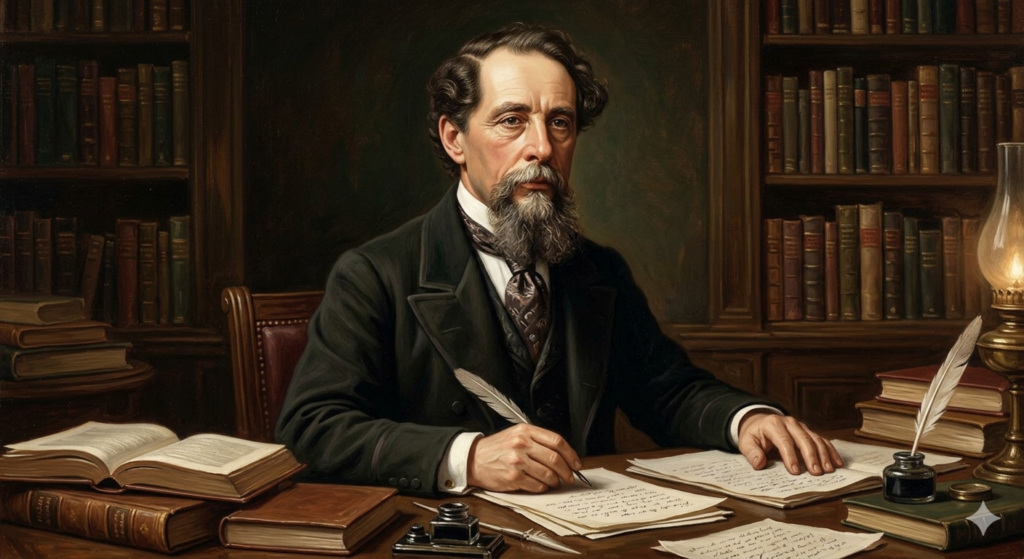
1. Who was Charles Dickens?
2. What personal experience deeply defined Dickens’s worldview?
3. Which of the following is a masterpiece written by Dickens?
4. What did Dickens use to expose the problems of industrialized London?
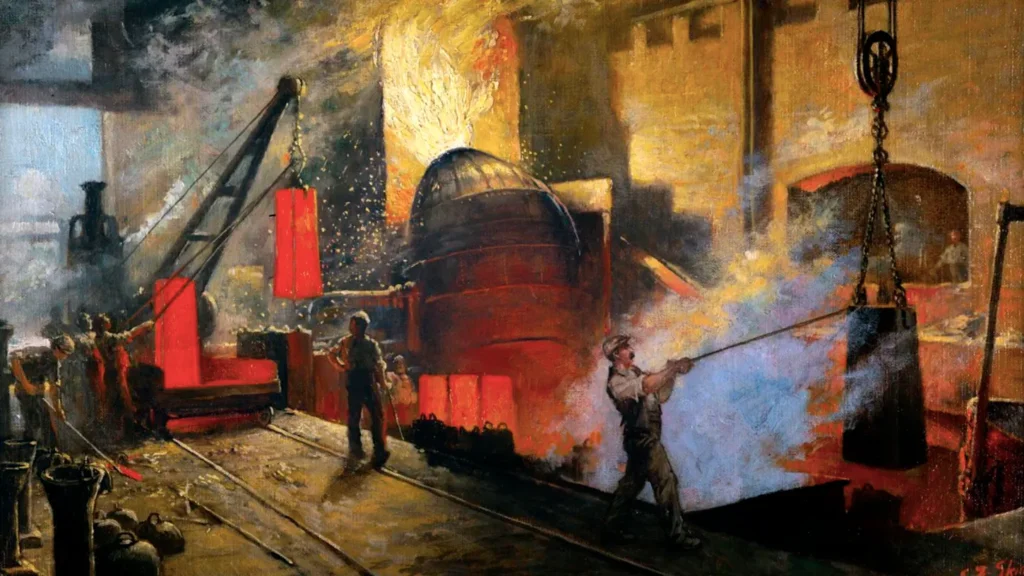
5. Where did the Industrial Revolution begin?
6. What natural resources fueled the British Industrial Revolution?
7. Which cities saw massive growth as people looked for work?
8. What was a major negative consequence of the factory system?
Part II: True or False with Multiple Choice (1 point each)
Select the correct option to determine if the statement is True (T) or False (F).
9. Charles Dickens was born in the year 1870.
10. Dickens used his fame to promote educational and health reforms.
11. The Industrial Revolution caused a shift from mechanized manufacturing to agrarian economies.
12. The introduction of the assembly line and steam power made mass production possible.
13. A new middle class of factory owners emerged during the Industrial Revolution.
14. Workers always had short working hours and safe environments before the rise of trade unions.
15. Dickens’s grave is located in Poet’s Corner at Westminster Abbey.
16. The British landscape changed from smoky factory skylines to green fields.
Part III: Sentence Completion (1 point each)
Choose the correct option to complete each sentence based on the texts.
17. Dickens’s childhood was marked by ________ and forced labor.
18. Dickens managed to channel his life experiences through journalism and ________.
19. Dickens is recognized as a pioneer of English literary ________.
20. Innovations like the ________ fundamentally transformed how goods were produced.
21. The Industrial Revolution laid the essential groundwork for modern ________.
22. Harsh factory realities eventually sparked the rise of ________ to protect workers.
23. The legacy of the Industrial Revolution highlighted the urgent need for social ________.
24. Dickens’s stories are characterized by sharp criticism of British ________.
25. Ultimately, the revolution transitioned Britain into the ________ era.